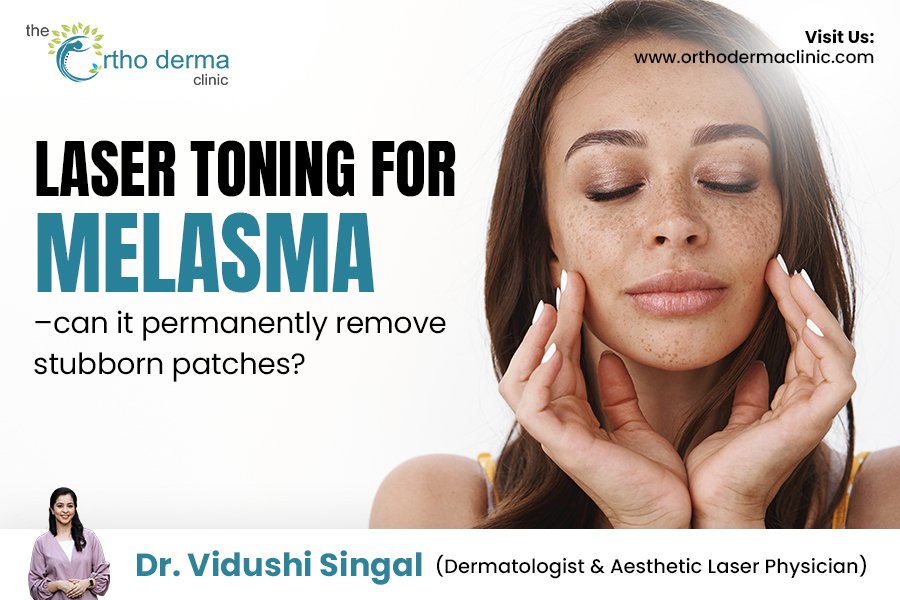
Melasma is one of the most emotionally challenging skin conditions to live with. Not because it is dangerous — it is entirely benign — but because it is so visible, so persistent, and so deeply resistant to treatment. Countless people try sunscreen religiously, use prescribed creams, avoid the sun, and still find those brown or grey-brown patches sitting stubbornly on their cheeks, forehead, or upper lip, barely responding despite everything they do.
After years of trying creams, home remedies, and facials with little to show for it, the question that most people eventually arrive at is this:
Can laser toning finally get rid of melasma permanently?
It is a completely fair question — and one that deserves a thorough, honest answer grounded in science and clinical reality.
What Is Melasma and Why Is It So Stubborn?
Before exploring what laser toning can and cannot do, it is worth understanding exactly what melasma is — because it is not simply a pigmentation problem. It is a complex, chronic condition rooted in the biology of melanocytes, the pigment-producing cells in the skin.
Melasma occurs when melanocytes become hyperactive — producing more melanin than normal in specific areas of the face. This hyperactivity is triggered and sustained by a combination of factors that make melasma uniquely difficult to treat.
The primary triggers include ultraviolet radiation from sun exposure, visible light including blue light from screens, hormonal influences particularly oestrogen and progesterone, heat, and genetic predisposition. Melasma is significantly more prevalent in women than in men, and dramatically more common in people with darker skin tones — Fitzpatrick skin types III through VI — which is precisely why it is so prevalent in the Indian population.
What makes melasma so stubborn is that it does not simply involve excess melanin sitting in the skin waiting to be removed. It involves fundamentally altered melanocytes that have essentially been reprogrammed to overproduce pigment. Additionally, melasma has a vascular component — abnormal blood vessel proliferation beneath the patches that feeds and sustains the pigmentation. Treating the pigment alone while ignoring the vascularity means the patches return with remarkable predictability.
There is also the matter of dermal melasma — pigment that has migrated deep into the dermis rather than sitting in the epidermis where most treatments can reach it. Dermal melasma is significantly harder to treat than epidermal melasma, responds more slowly, and is far more prone to recurrence.
Understanding all of this is essential to understanding why laser toning works the way it does — and what its real limitations are.
What Is Laser Toning?
Laser toning is a specific application of Q-switched Nd:YAG laser technology, delivered at low fluence — meaning lower energy than traditional high-powered laser treatments. The Q-switched Nd:YAG laser emits light at 1064 nanometres wavelength, which is selectively absorbed by melanin in the skin.
At low fluence settings, laser toning works through a mechanism called subcellular selective photothermolysis. Rather than destroying entire melanocytes — which at high energy can trigger post-inflammatory hyperpigmentation, a serious risk in darker skin tones — low fluence laser toning targets the melanosomes within the melanocyte. These are the organelles that produce and store melanin. By disrupting the melanosomes without destroying the entire cell, laser toning suppresses melanin production while keeping surrounding tissue intact.
The result is a gradual reduction in pigmentation with each session, accompanied by an improvement in overall skin tone, texture, and luminosity. Because the treatment is delivered at low energy, it is significantly safer for Indian skin tones than ablative or high-fluence laser approaches, and the risk of post-inflammatory hyperpigmentation is substantially reduced when performed correctly by an experienced dermatologist.
A typical laser toning session takes between 20 and 30 minutes. There is no downtime. Patients may experience mild warmth and temporary pinkness that resolves within a few hours — making it a procedure that can be done and normal activities resumed immediately.
How Does Laser Toning Specifically Target Melasma?
The mechanism by which laser toning addresses melasma operates on several levels simultaneously, which is what distinguishes it from topical treatments that work on only one aspect of the condition.
At the melanosome level, the laser energy disrupts pigment granules within hyperactive melanocytes, reducing their capacity to produce melanin. This directly addresses the visible pigmentation.
At the cellular level, repeated low fluence treatments gradually suppress the overall activity of hyperactive melanocytes — not destroying them, but essentially calming them down and reducing their excessive pigment production over a course of sessions.
At the vascular level — and this is where the 1064nm Nd:YAG laser has a particular advantage — the wavelength also targets the abnormal blood vessels that characterise the vascular component of melasma. By addressing the vascularity that sustains the pigmentation, laser toning targets a root cause rather than just the visible symptom.
Over a course of treatments, typically six to ten sessions spaced one to two weeks apart, patients see a progressive lightening of melasma patches, improved skin evenness, and in many cases a significant reduction in the overall pigment load.
Can Laser Toning Permanently Remove Melasma?
This is the question every patient asks. And it deserves a completely honest answer.
No. Laser toning cannot permanently cure melasma.
This is not stated to discourage anyone from pursuing treatment, but because understanding this reality is what allows patients to manage melasma successfully over the long term rather than cycling through disappointment and relapse.
Melasma is a chronic condition. It is not a fixed amount of pigment that, once removed, stays gone. It is a tendency of the melanocytes — a biological predisposition — to overproduce pigment when triggered. Laser toning can clear the visible pigmentation and significantly suppress melanocyte hyperactivity. But the underlying tendency remains.
What this means in practice is that if the triggers continue — unprotected sun exposure, hormonal fluctuations, heat, visible light — the melanocytes will reactivate and the pigmentation will return. This is not a failure of the treatment. It is the nature of the condition.
The patients who maintain the best long-term results from laser toning are those who understand melasma as something to be managed rather than cured, and who commit to the maintenance protocols that sustain the results achieved through treatment.
With the right approach, melasma can be kept in a state of significant clearance for extended periods — sometimes years — to a degree that meaningfully improves quality of life and skin confidence. That is a realistic and genuinely achievable goal. Permanent eradication is not.
Who Is a Good Candidate for Laser Toning?
Laser toning is suitable for a wide range of patients with melasma, but some respond better than others. A thorough individual assessment by a qualified dermatologist is always the right starting point before recommending any treatment protocol.
Patients who tend to respond best include those with predominantly epidermal melasma, those who are disciplined about sun protection and willing to maintain SPF compliance throughout and after treatment, those who are not currently pregnant or breastfeeding, and those who have realistic expectations about gradual improvement over a course of sessions rather than dramatic results from a single treatment.Patients with predominantly dermal melasma typically see slower and more modest results. Patients with very dark skin tones — Fitzpatrick type VI — require particularly careful parameter selection to minimise the risk of post-inflammatory hyperpigmentation, though laser toning at appropriate settings remains a viable option in experienced hands.Patients who are currently taking oral contraceptives or hormone replacement therapy should discuss this with their dermatologist, as ongoing hormonal stimulation can significantly limit treatment response and increase the likelihood of recurrence.
What Does a Laser Toning Treatment Course Look Like?
At Orthoderma Clinic, melasma is approached comprehensively rather than relying on laser toning in isolation. The evidence clearly shows that combination approaches produce superior and more durable results.
A typical treatment course begins with a thorough consultation and skin assessment. A Wood’s lamp examination and detailed clinical assessment help determine the depth and pattern of melasma — epidermal, dermal, or mixed — as this significantly influences the treatment plan and the realistic expectations set at the outset.
Before beginning laser toning, a preparatory phase of topical treatment is typically recommended — usually a combination of prescription-strength hydroquinone, tretinoin, and a topical corticosteroid, sometimes referred to as a triple combination cream. This preparation phase primes the skin, reduces baseline melanocyte activity, and significantly improves the response to laser treatment.
The laser toning course itself typically involves six to ten sessions, spaced one to two weeks apart. Parameters are carefully calibrated for each patient’s skin type, melasma pattern, and response to previous sessions. No two patients receive identical treatment — personalisation is essential.
Between sessions, patients follow a comprehensive home care protocol including broad spectrum SPF 50 plus sunscreen applied every morning and reapplied every two to three hours during daylight, antioxidant serums particularly Vitamin C and niacinamide, and prescription topicals as indicated.
After the initial course, maintenance sessions are scheduled — typically once every six to eight weeks — to sustain results and prevent significant recurrence. This maintenance phase is an essential part of long-term melasma management, not an optional add-on.
Laser Toning vs Other Treatments for Melasma
Laser toning is one of several treatment modalities available for melasma, and understanding how it compares helps patients make informed decisions.
Topical treatments including hydroquinone, tretinoin, azelaic acid, kojic acid, tranexamic acid, and combination creams are the foundation of melasma management and should accompany any laser treatment programme. They are effective at controlling melasma but typically produce slower results and require indefinite continuation to maintain those results.
Chemical peels — particularly superficial peels with glycolic acid, lactic acid, or trichloroacetic acid — can complement laser toning by accelerating epidermal turnover and improving pigmentation. However, in darker skin tones, peels carry a meaningful risk of post-inflammatory hyperpigmentation if not performed at appropriate depths and concentrations.
Oral tranexamic acid has emerged as one of the most significant advances in melasma management in recent years. It works through a completely different mechanism — inhibiting the interaction between keratinocytes and melanocytes that drives melanin overproduction, and reducing the vascular component of melasma.
Combining oral tranexamic acid with laser toning addresses melasma through multiple pathways simultaneously, producing results that are demonstrably superior to either treatment alone.
High-fluence or ablative laser treatments are generally not recommended for melasma — particularly in darker skin tones — as the risk of post-inflammatory hyperpigmentation and paradoxical darkening is significant. Low fluence laser toning is specifically chosen for melasma because of its superior safety profile in pigment-rich skin.
The Non-Negotiable Role of Sun Protection
No discussion of melasma treatment is complete without dedicated attention to sun protection — because without it, no treatment for melasma will produce lasting results. Full stop.
UV radiation is the single most powerful trigger of melanocyte hyperactivity. Even brief, incidental sun exposure — walking to a car, sitting near a window, stepping outside for five minutes at midday — is sufficient to reactivate melasma that has been carefully cleared over months of treatment.
The following sun protection protocol is non-negotiable for anyone undergoing laser toning for melasma.
A broad spectrum SPF 50 plus sunscreen must be applied every single morning, regardless of weather or planned outdoor exposure. It must be reapplied every two to three hours during daylight hours. Physical sunscreens containing zinc oxide and titanium dioxide are preferred for melasma patients because they provide protection against both UV and visible light.
Sunscreens containing iron oxides are particularly valuable as they provide meaningful protection against visible light and blue light, which can also trigger melasma independently of UV exposure.
Physical protection — wide-brimmed hats, UV-protective clothing, and seeking shade — complements sunscreen but does not replace it.
Patients who commit absolutely to this protocol consistently achieve and maintain better results than those who are inconsistent, regardless of the treatment modality used. Sun protection is not an adjunct to melasma treatment. It is the foundation.
Managing Expectations — What Results Actually Look Like
Understanding what realistic results look like and over what timeframe is one of the most important aspects of melasma treatment.
Laser toning is not a dramatic, instant-result treatment. It is a gradual, cumulative process. Most patients begin to notice visible lightening after the third or fourth session. Significant improvement — a meaningful reduction in the visibility of patches — is typically seen after a full course of six to ten sessions, which means three to five months of treatment.
The degree of improvement varies considerably between patients. Patients with predominantly epidermal melasma who are rigorous about sun protection can achieve clearance that approaches near-complete resolution during the treatment course.
Patients with deep dermal melasma, or those who continue to be exposed to significant hormonal or UV triggers, may achieve partial improvement — which is still clinically meaningful and often transformative for confidence and quality of life.
Photographing the skin at the start of treatment and at regular intervals throughout is strongly recommended. The gradual nature of improvement means patients often do not consciously register how much progress has been made. A side-by-side comparison from three months prior frequently reveals a level of improvement that was not subjectively apparent.
Side Effects and Safety Considerations
Laser toning, when performed by a trained and experienced dermatologist at appropriate parameters for the patient’s skin type, has an excellent safety profile. However, patients should be aware of potential side effects and the factors that influence risk.
The most common side effects are mild and transient — temporary warmth during the procedure, mild redness immediately after that typically resolves within a few hours, and occasionally a feeling of skin sensitivity for 24 to 48 hours post-treatment.
The most significant potential risk in Indian skin tones is post-inflammatory hyperpigmentation — a darkening of the treated area triggered by the inflammatory response to the laser.
This risk is substantially reduced with low fluence settings specifically chosen for darker skin, but it is not zero. Choosing an experienced dermatologist who is specifically skilled in treating darker skin tones with laser technology is critically important. Incorrect parameters in inexperienced hands can cause significant pigmentation complications that are themselves difficult to treat.
Paradoxical darkening — where melasma temporarily worsens in the initial weeks of treatment before improving — can occur in some patients. Being aware of this possibility beforehand prevents premature discontinuation of treatment. An experienced dermatologist will anticipate this and adjust the treatment protocol accordingly.
The Comprehensive Approach to Melasma at Orthoderma Clinic
Melasma is a condition that demands genuine care and intellectual rigour — because patients who have been through multiple rounds of aggressive treatment, spent significant amounts of money, and been left with skin that is no better — and sometimes worse — than when they started are far too common.
At Orthoderma Clinic, the approach to melasma is always comprehensive, always personalised, and always grounded in honest expectation-setting.
The most effective melasma treatment plans combine laser toning with topical actives, oral tranexamic acid where indicated, and rigorous sun protection — addressing the condition from multiple angles rather than relying on any single modality.
The goal is not perfection. The goal is meaningful, sustained improvement in pigmentation and skin quality that gives patients back their confidence and their comfort in their own skin.
Frequently Asked Questions
Is laser toning painful?
Laser toning is very well tolerated. Most patients describe the sensation as mild warmth or a light snapping feeling during the procedure. Topical anaesthetic cream is available for patients with lower pain tolerance, though the majority of patients do not require it.
How many sessions will I need?
Most melasma patients require between six and ten sessions for the initial treatment course, spaced one to two weeks apart. The exact number depends on the depth and severity of the melasma and individual skin response. Maintenance sessions every six to eight weeks are recommended thereafter.
Can laser toning be done in summer?
Laser toning can be performed year round, but strict sun protection is even more critical during summer months. Some dermatologists prefer to schedule intensive treatment courses during winter when UV exposure is lower and sun protection compliance is easier. Treatment protocols are adjusted seasonally based on each patient’s lifestyle and sun exposure patterns.
Will melasma come back after laser toning?
Melasma has a tendency to recur, particularly in the presence of ongoing triggers such as sun exposure, heat, and hormonal fluctuations. With maintenance laser sessions and rigorous sun protection, recurrence can be significantly delayed and managed. Patients who are consistent with their maintenance protocol maintain their results far longer than those who treat melasma as a one-time intervention.
How is laser toning different from other laser treatments for pigmentation?
Unlike ablative lasers or high-fluence Q-switched lasers that remove or destroy pigmented cells — and carry significant risk of post-inflammatory hyperpigmentation in darker skin — laser toning uses low fluence settings that suppress melanin production without destroying melanocytes.
This makes it specifically suited to melasma in Indian skin tones, where the risk of PIH from more aggressive laser approaches is considerable.
Can makeup be worn after a laser toning session?
It is generally recommended to avoid makeup for 24 hours after a session to allow the skin to settle. After this period, makeup can be applied normally. Ensuring all makeup products used during the treatment course are non-comedogenic and free from potential irritants is advisable.
Is laser toning suitable during pregnancy?
Laser toning is not recommended during pregnancy. Melasma that develops or worsens during pregnancy — sometimes called the mask of pregnancy or chloasma — is best managed conservatively with safe topical agents and rigorous sun protection during the pregnancy, with laser treatment considered after delivery and the completion of breastfeeding.
For personalised assessment and treatment of melasma, consult a qualified dermatologist. Orthoderma Clinic, Ludhiana offers expert dermatological care for pigmentation disorders and a full range of medical and aesthetic skin treatments.