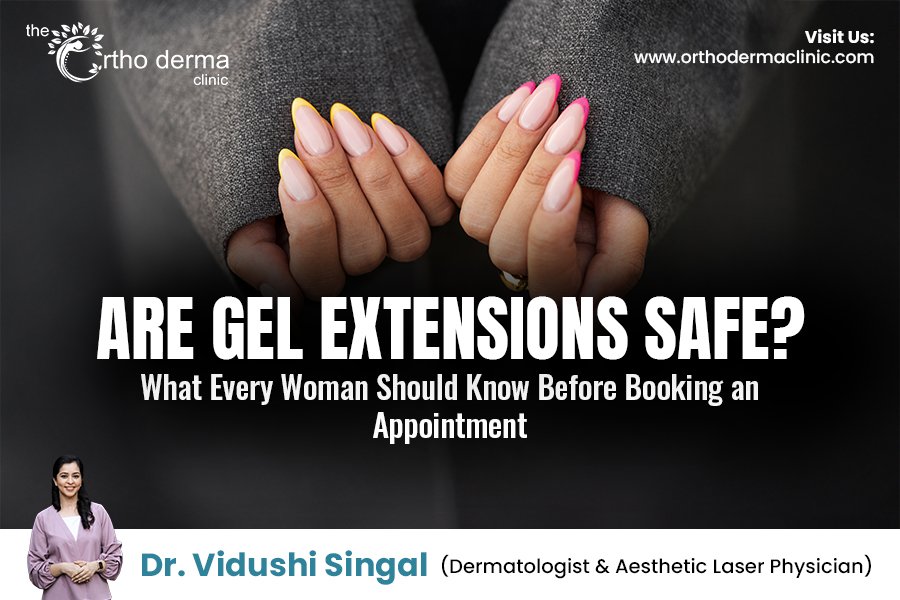
Beautiful, glossy, perfectly shaped nails are every woman’s dream—and gel extensions make that possible in just one salon visit. But with rising cases of nail damage, infections and allergic reactions, many women wonder:
“Are gel nail extensions really safe?”
Let’s break it down from a dermatologist’s point of view.
What Are Gel Extensions?
Gel extensions are artificial nails created by applying a gel-based formula onto your natural nails or nail tips and curing it under a UV/LED lamp. They look natural, last long, and don’t chip easily—making them extremely popular.
But like any beauty procedure, they come with pros and cons.
Are Gel Extensions Safe? The Dermatologist’s Answer: YES—But Only If Done Correctly.
Gel extensions are generally safe, but their safety depends on:
- Quality of products used
- Hygiene at the salon
- Correct application and removal
- Your nail health and skin sensitivity
Many nail problems we treat at Orthoderma Clinic occur due to improper technique, harsh filing, or poor hygiene at salons.
Risks You Should Know Before Choosing Gel Extensions
Here are the most common concerns seen in dermatology practice:
1. Nail Thinning & Weakening
Excessive filing before application or incorrect removal can make nails thin, soft, and brittle.
2. Fungal Infections (Onychomycosis)
If moisture gets trapped under poorly applied extensions, it can cause fungal growth—leading to discoloration, thickening, and nail lifting.
3. Allergic Reactions to Gel Products
Ingredients like acrylates may trigger redness, itching, swelling, or peeling around the nails.
4. UV Exposure During Curing
LED/UV lamps emit small doses of UV-A light. While low-risk, repeated exposure may cause tanning or sensitivity in some individuals.
5. Nail Breakage
If extensions are too long or thick, they can exert pressure on natural nails, causing cracks or traumatic injury.
How to Enjoy Gel Extensions—Safely
Here’s what Dr. Vidushi recommends to all her patients:
- Choose a Professional & Hygienic Salon
- Tools should be sterilized
- Files should be disposable
- Products should be branded & dermatologically safe
- Avoid Over-Filing
Your nail plate does NOT need aggressive buffing.
- Take Breaks Between Extensions
Allow your nails to breathe and regenerate every few months.
- Moisturize Daily
Cuticle oil keeps nails flexible and reduces breakage.
- Remove Extensions Professionally
DIY removal can tear the nail plate—always get it dissolved or filed gently by an expert.
Gel Extensions vs Regular Gel Polish – Which Is Safer?
- Regular gel polish is gentler and ideal for beginners or those with thin nails.
- Gel extensions add length and structure but require more skill to apply safely.
If you are unsure, start with gel polish first.
When to See a Dermatologist
Book an appointment if you notice:
- Yellow, green, or brown discoloration
- Nail lifting
- Pain or swelling
- Peeling skin around nails
- Persistent brittleness
These could indicate infection, contact dermatitis, or structural nail damage.
Remember
Gel extensions can be a safe, beautiful, confidence-boosting option—when done correctly and with proper aftercare.
But your natural nail health should always come first.
Need Help With Nail Damage or Infections?
Visit Orthoderma Clinic, Ludhiana. Dr. Vidushi Singal specializes in nail disorders, fungal infections, brittle nails, nail allergies, and nail rejuvenation treatments.