
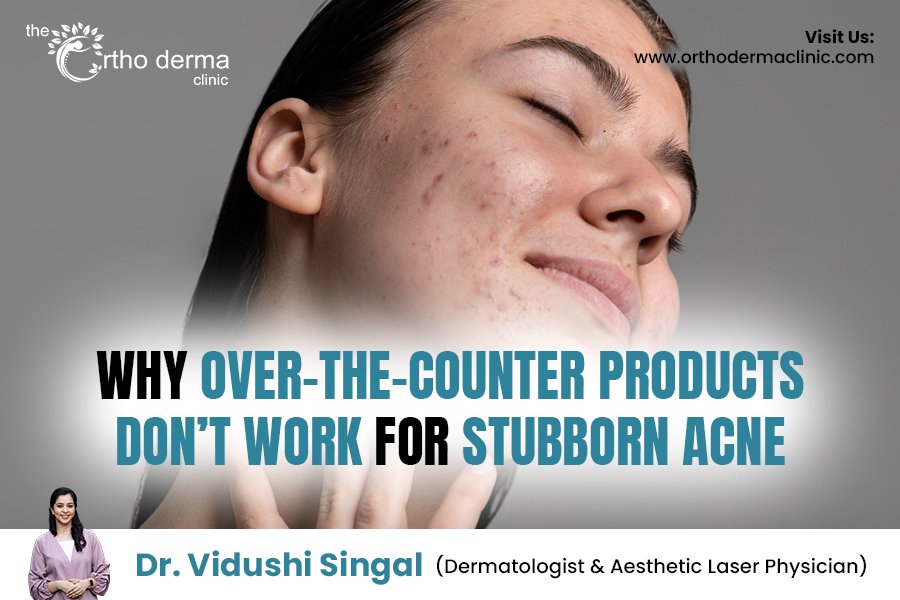
Acne is one of the most common skin concerns across all age groups. While mild breakouts may respond to basic skincare, stubborn or recurring acne often does not improve with over-the-counter (OTC) products.
Understanding why OTC products fail is the first step toward effective acne treatment.
What Is Stubborn Acne?
Stubborn acne refers to breakouts that:
- Persist for months or years
- Return after temporary improvement
- Leave marks or scars
- Do not respond to regular skincare products
This type of acne often has deeper underlying causes that topical OTC products cannot address.
Reason 1: OTC Products Treat Symptoms, Not Root Causes
Most OTC acne products focus on:
- Drying excess oil
- Reducing surface bacteria
- Temporary inflammation control
However, acne can be driven by:
- Hormonal imbalance
- Excess sebum production
- Blocked pores at deeper skin levels
- Inflammation beneath the surface
Without addressing these root causes, acne continues to recur.
Reason 2: Incorrect Product Selection
Many patients self-select products based on online reviews or social media trends. Using the wrong ingredients or concentrations can:
- Worsen acne
- Cause irritation
- Damage the skin barrier
- Trigger more breakouts
What works for one skin type may be harmful to another.
Reason 3: Inadequate Active Ingredient Strength
OTC products contain lower concentrations of active ingredients compared to prescription treatments. While this makes them safer for general use, it also limits their effectiveness for moderate to severe acne.
Stubborn acne often requires medical-grade formulations that penetrate deeper layers of the skin.
Reason 4: Overuse and Product Overload
In an attempt to “fix” acne faster, many people:
- Use multiple acne products together
- Over-cleanse or over-exfoliate
- Combine incompatible ingredients
This leads to irritation, increased oil production, and worsening breakouts.
Reason 5: Ignoring Acne Type and Skin Condition
Acne is not a single condition. It can be:
- Hormonal acne
- Cystic acne
- Comedonal acne
- Acne with pigmentation or scarring
OTC products are not designed to treat specific acne types or associated skin concerns.
Why Dermatologist-Led Acne Treatment Works
At Orthoderma Clinic, Dr. Vidushi Singal follows a comprehensive acne treatment approach that includes:
- Accurate diagnosis
- Identification of triggers
- Customized skincare plans
- Prescription medications when required
- In-clinic procedures for faster results
Treatment plans are adjusted based on skin response rather than trial and error.
Advanced Acne Treatments Beyond OTC Products
Depending on the condition, dermatological acne treatment may include:
- Prescription topical and oral medications
- Chemical peels
- Laser and light-based therapies
- Acne scar management
- Maintenance skincare plans
These treatments target acne at multiple levels for long-term improvement.
Risks of Relying Only on OTC Products
Delaying proper treatment can result in:
- Permanent acne scars
- Persistent pigmentation
- Skin sensitivity and damage
- Emotional stress and low confidence
Early dermatological intervention helps prevent long-term complications.
When Should You See a Dermatologist?
Consult a dermatologist if:
- Acne persists beyond a few weeks
- Breakouts are painful or cystic
- OTC products are ineffective
- Acne leaves marks or scars
Professional evaluation ensures safe and effective care.
Final Thoughts
While over-the-counter products may help mild acne, they are often insufficient for stubborn or recurring breakouts. Acne is a medical condition that requires personalized, dermatologist-guided treatment for lasting results.
If you’re struggling with acne that doesn’t respond to regular skincare, consult Dr. Vidushi Singal at Orthoderma Clinic for a targeted treatment plan designed specifically for your skin.